Vendor-Independent AI on FPGAs: One VHDL Stack for Any Architecture
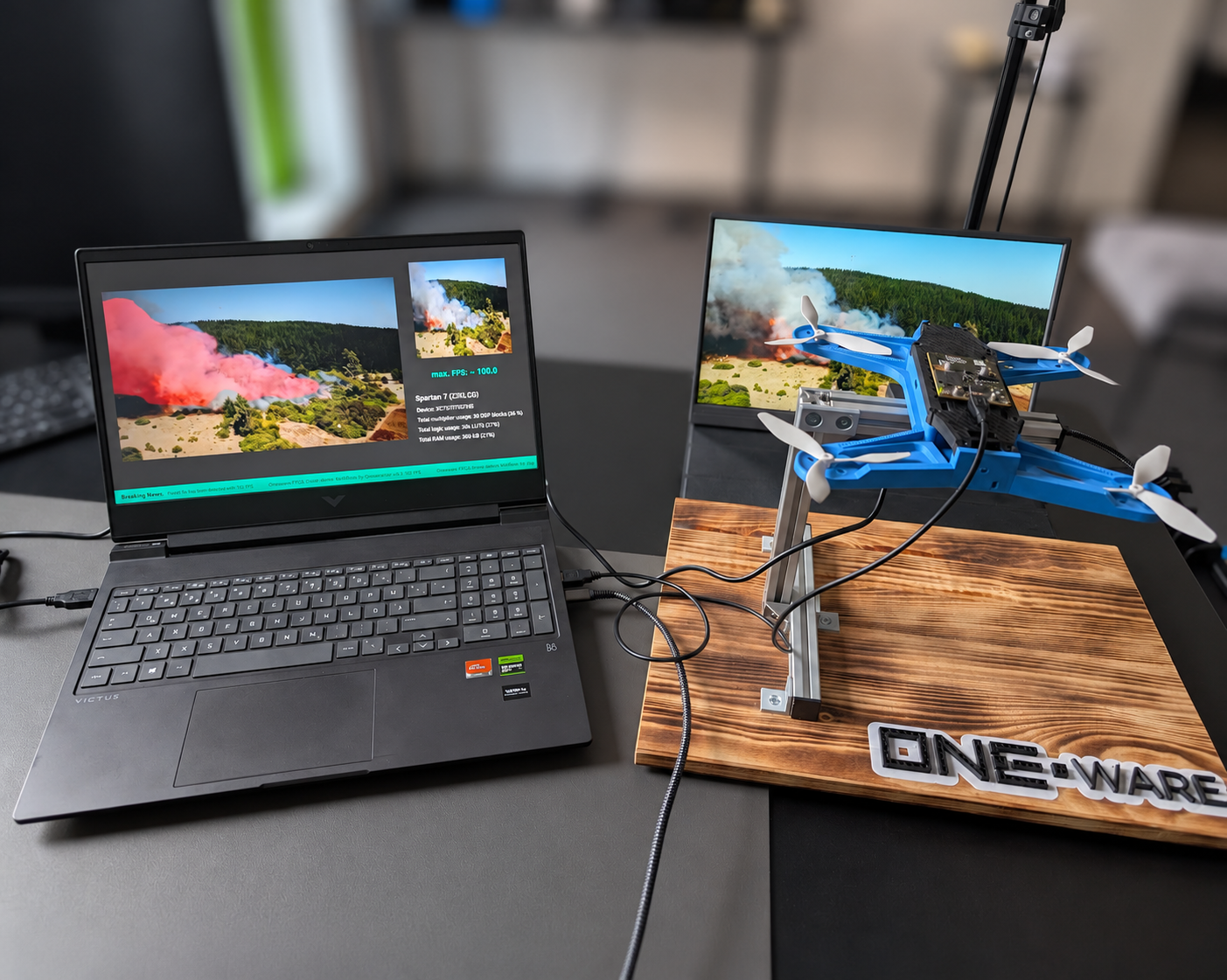
From the beginning, the VHDL export of ONE AI was designed to be vendor-independent. Instead of tying models to proprietary IP cores or a single hardware ecosystem, ONE AI generates clean, hardware-adapted VHDL that maps efficiently to any target FPGA fabric. As we continue expanding our VHDL code stack across additional device families, our wildfire segmentation demo now also runs out of the box on a compact Spartan-7 in real time.
One Model, Any FPGA Architecture
For this test, we used the Wildfire Segmentation Demo that we previously showcased at Embedded World. ONE AI generated a custom CNN for single-class wildfire segmentation in drone imagery. For this configuration, it takes 64 × 64 grayscale input and has only 8,550 parameters, compared with millions for universal models such as UNet or DeepLabv3+.
Because the generated VHDL architecture is portable across vendors, the exact same model can be synthesized for different FPGA families without redesigning the neural network. To validate cross-platform portability on a small entry-level target, we synthesized and deployed the model on an XC7S25 (FTGB196).
Results on the Target Device
| Metric | Result |
|---|---|
| Device | Spartan-7 XC7S25 |
| Clock | 40 MHz |
| Throughput | 39.53 FPS |
| Input | 64 × 64, grayscale |
FPGA Resource Usage
| Resource | Usage | Percentage |
|---|---|---|
| LUT | ~3,900 / 14,600 | 27% |
| BRAM | 9.5 / 45 | 21% |
| DSP | 20 / 80 | 25% |
At 40 MHz, the design reaches 39.53 FPS. It needs about 1 million clock cycles per frame, maintaining the same cycle-for-cycle efficiency across different FPGA architectures (~100 FPS at 100 MHz). The generated hardware architecture delivers predictable throughput per MHz regardless of the underlying FPGA family, so higher clock frequencies directly translate to higher frame rates.
Even on this compact device, the network uses only about a quarter of the available logic and DSPs. That leaves plenty of room for the rest of the system, such as the camera interface, pre- and post-processing, and communication, all on the same chip.
Inference Results from the FPGA
The following images are taken from the demo video. On the left is the original frame. On the right is the segmentation mask inferred directly on the FPGA, shown as an overlay.
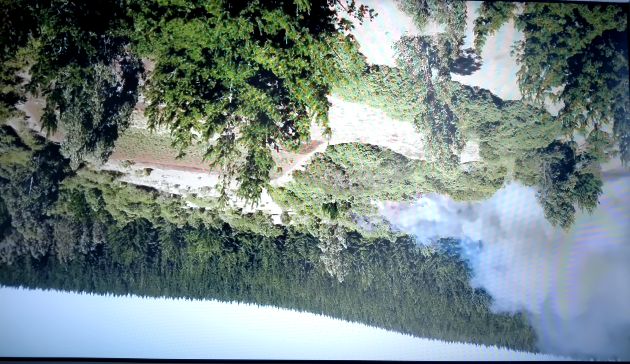
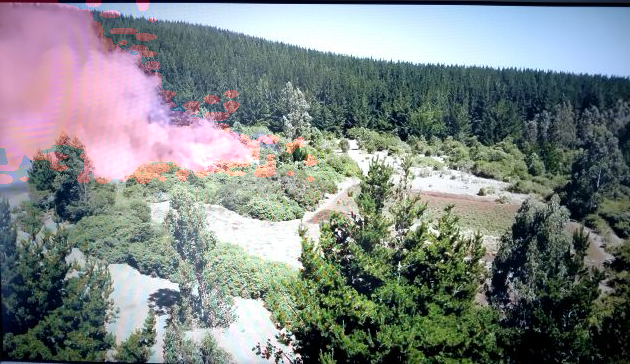
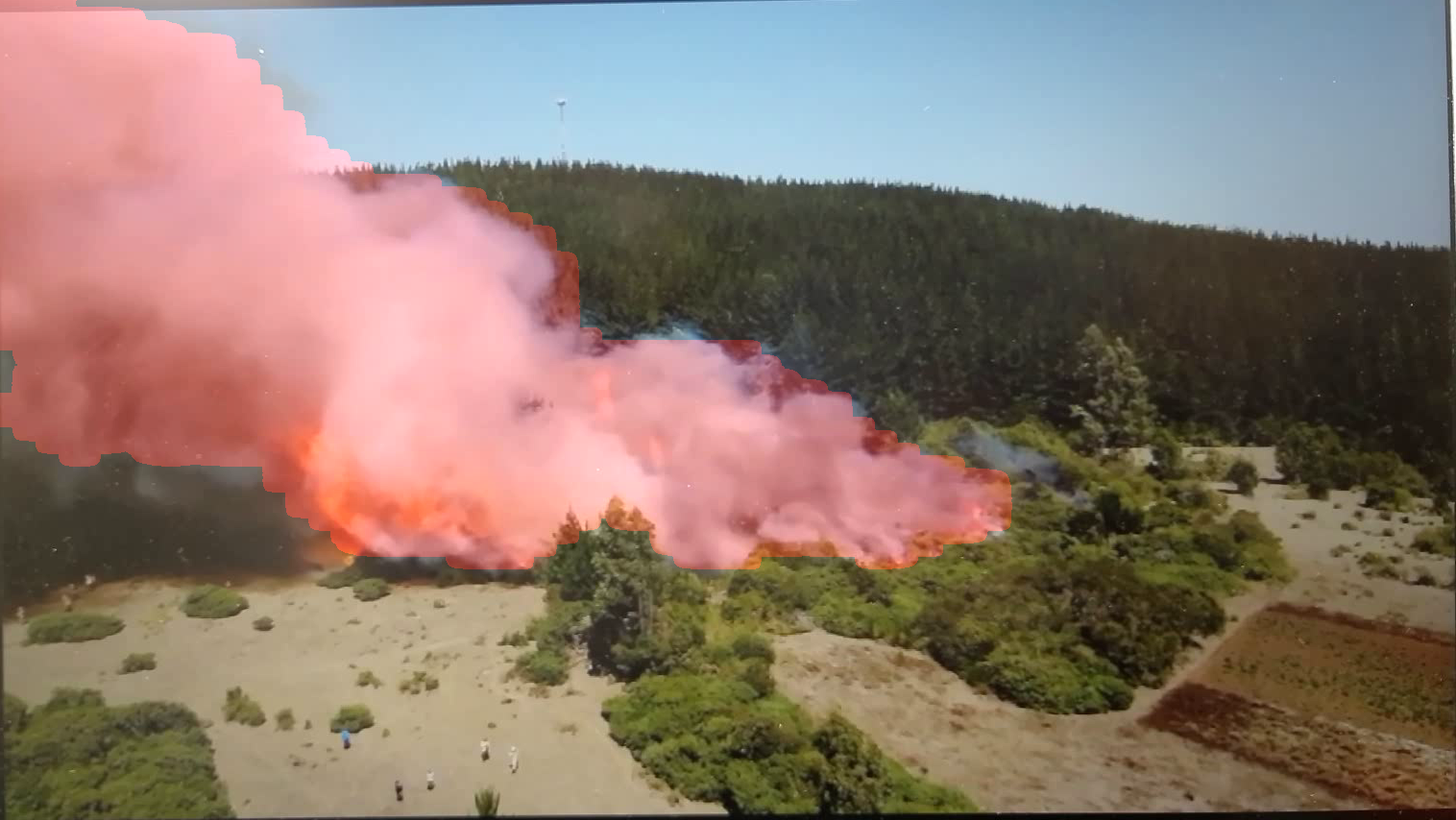
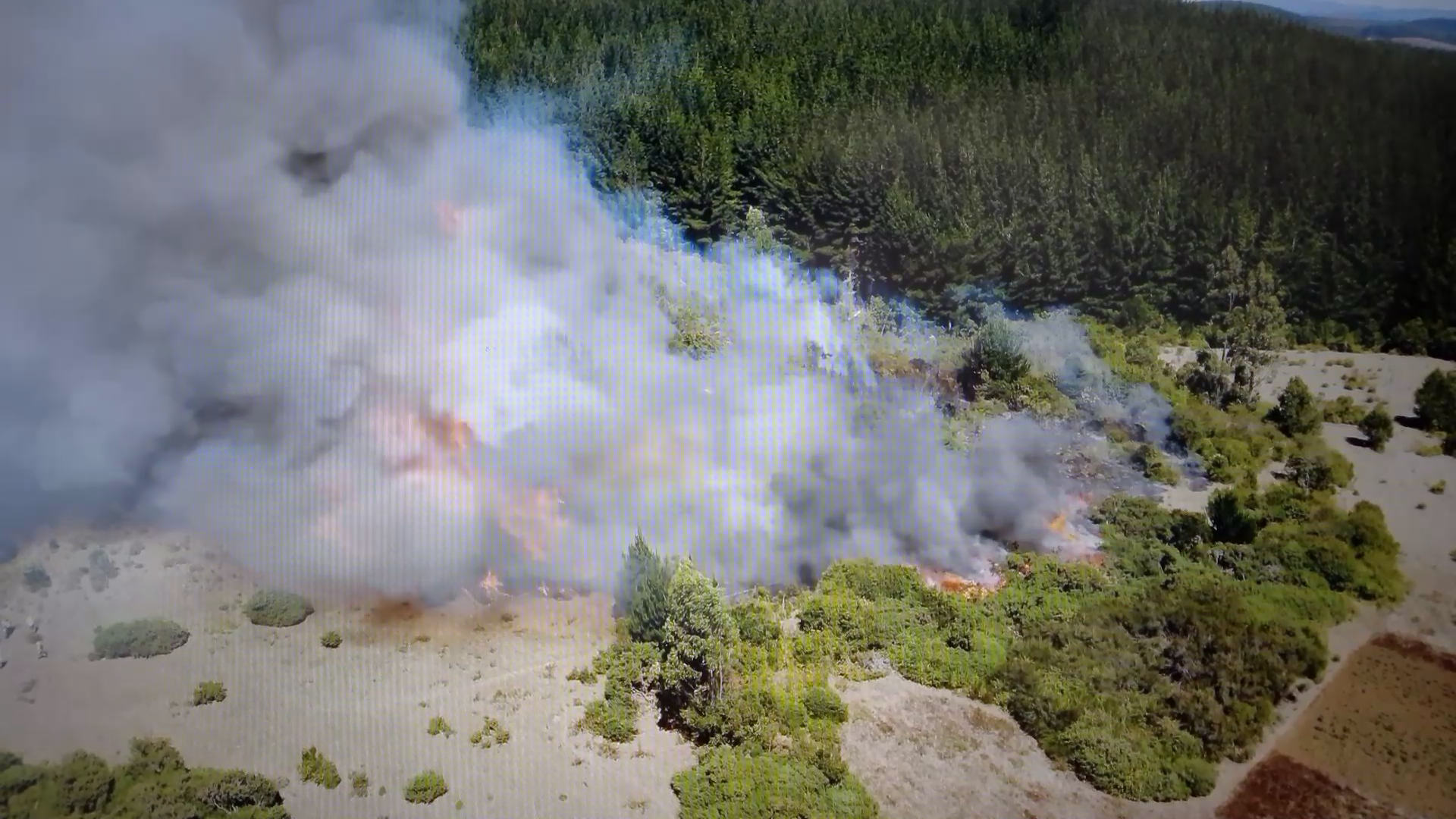
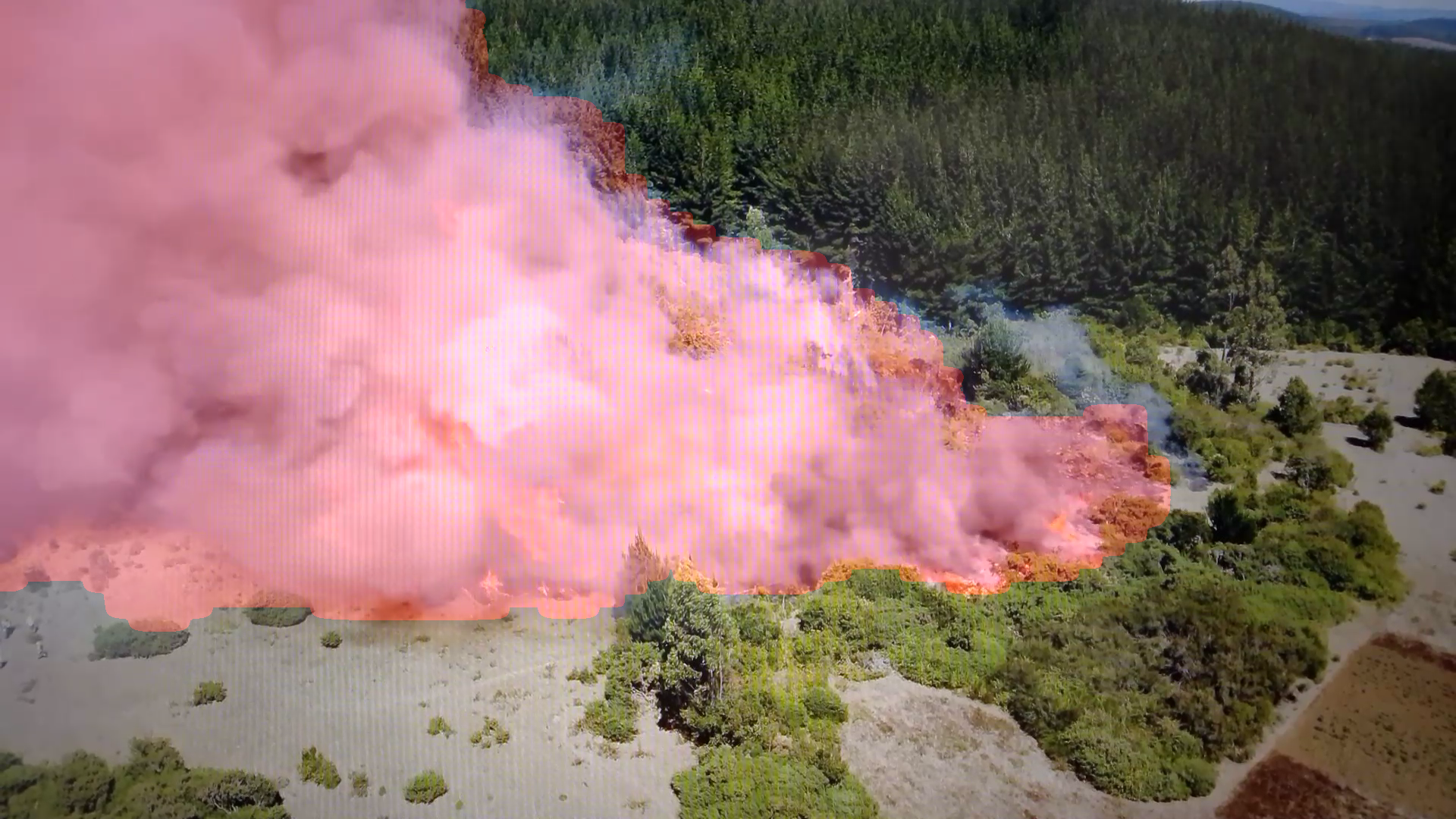
Left: original frames from the demo video. Right: wildfire masks inferred directly on the FPGA.
Why Vendor Independence Matters
Hardware teams choose their FPGA platform based on performance targets, power budgets, existing board designs, and long-term supply strategy. With ONE AI's vendor-independent VHDL stack, you have full freedom in choosing your hardware:
- Full hardware flexibility: deploy on the FPGA family that best fits your project, or bring AI to your existing board designs without changing your workflow
- No vendor lock-in: train once in ONE AI and export standard, portable VHDL that integrates directly into your existing synthesis and verification toolchain
- Run AI on compact, cost-efficient FPGAs: ONE AI builds models tailored to your task and resource budget instead of shrinking a universal model
- Deterministic, low-latency inference: ideal for real-time industrial, vision, and safety-critical edge applications
What's Next
We are finalizing the expanded multi-vendor VHDL export and will make it available in ONE AI soon. Until then, you can try the wildfire demo in ONE WARE Studio. Regardless of which FPGA platform you are building on, get in touch - we are happy to discuss your use case and give you early access.